The paper bag is not a simple object. It is the result of a sequence of technical innovations that addressed very specific challenges: production, stability, storage… and finally, transportation.
In 1852, Francis Wolle developed the first machine capable of producing paper bags industrially. This enabled scale, but functionality was still limited.
In the 1870s, Margaret Knight introduced the square bottom. The bag could stand upright, be filled more efficiently and make better use of its volume.
Later, Charles Stillwell added pleated sides, improving folding, transport and storage.
The decisive step came in 1918.
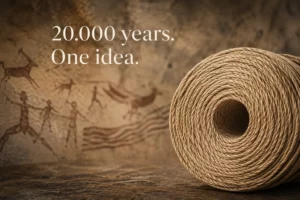
The Deubener brothers introduced reinforced rope handles. From that moment on, the paper bag was no longer just a container. It became something designed to be carried, repeatedly, under real conditions.
Handles introduced a new technical requirement: strength, reliability, ergonomics and durability.
At Mimcord, we continue to work on this same principle today. Manufacturing paper cords for twisted bag handles is not adding an add-on it is taking a structural responsibility. A small but decisive element.